
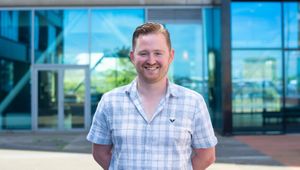
Not every senior engineer wants to move into people management or focus purely on architecture. At Funda, we spotted a growing need for a role that allows experienced engineers to stay close to the code while contributing across teams. CTO Eduardo Neves and Principal Engineer Robin Perz explain why we introduced this new role, and how it fits into our engineering organisation.
A gap between leadership tracks
Within Funda’s engineering organisation, two leadership tracks had already taken shape. Lead engineers focused on people development and team direction, while staff engineers provided technical direction and architectural guidance. Over time, however, it became clear that not every senior engineer naturally fitted into one of these tracks.
As CTO Eduardo Neves explains: ‘We saw a bit of a gap: engineers who excelled in their craft, who loved working in a team on unwrapping technical challenges, and who really had an interest in building things day in, day out, but were not so into people management or high-level architecture.’
At the same time, teams occasionally needed additional experience for specific projects or more complex periods. Eduardo: ‘With fairly small teams and different levels of seniority, we sometimes had to bring in extra experience for a particular project or a trickier period.’ In those cases, external consultants were often the solution.
That combination of factors led to the question: could we create a role that kept this expertise in-house, while offering another growth path for senior engineers?
See also: Tackling fragmentation: scaling native advertising at Funda
Introducing the principal engineer
The answer was the introduction of the principal engineer role. Principal engineers act as internal consultants, temporarily joining teams where additional seniority or experience is needed. They work closely with lead and staff engineers and focus on helping teams move projects forward.
Eduardo describes it simply: ‘If a challenging project is coming to a team that would benefit from some extra seniority, they will join that team. If a team needs to work on a new domain, they will join that team.’
For Robin Perz, Funda’s first Principal Engineer, the role fits with how he likes to work. ‘I think of this role as a kind of Swiss army knife. Because of a broad interest in how things work and how they’re built, you can step into different teams and quickly contribute in multiple areas.’
Another kind of ownership
The principal engineer role sits alongside lead and staff engineers but comes with a different type of responsibility. ‘At Funda, lead engineers focus on people, staff engineers focus on technical direction, while principal engineers focus on the implementation of projects,’ Robin explains.
This focus includes making trade-offs during development, helping teams stay on track and ensuring that projects move forward in a practical and realistic way. Robin approaches this with a critical mindset: ‘I tend to question things – whether it’s the feature, the design or the approach – because that helps ensure we’re building the right thing at the right time.’
This way of working supports teams to make decisions with more confidence, especially in projects with tight timelines or complex requirements.
From idea to reality
The idea for the role developed over time, based on both organisational needs and individual ambition. ‘Eduardo had been thinking for a while that there was something missing between staff and lead,’ Robin explains. ‘At the same time, I was looking for more challenge and variety in my work.’
Before the role was formally introduced, Robin had already started working in a similar capacity by joining another team and contributing across different areas. According to Eduardo, this worked well in practice: ‘He felt so natural in that position that principal engineer didn’t really feel like a new role.’
Working across teams
A key aspect of the principal engineer role is working across multiple teams. Instead of being part of one team long-term, principal engineers move between teams depending on where they are needed most.
For Robin, this is one of the main reasons the role is appealing: ‘What I enjoy most is working with different people and contributing to technically complex projects across different domains.’
At the same time, this way of working requires flexibility. ‘You need to be able to collaborate with different teams and adapt quickly,’ he says. ‘You’re there to support the team and help them move forward.’
Because principal engineers work closely with multiple teams and staff engineers, they also help connect technical direction with day-to-day implementation.
See also: Hackathon 2026: what we built when we stepped off the roadmap
A role for a specific kind of engineer
What kind of engineers are suitable to become principal engineers? According to Robin, it suits people who enjoy variety and working across different contexts: ‘If you have a broad interest in what’s happening across the company, like working on different projects and picking up new techniques quickly, then this role fits you well.’
It may be less suitable for engineers who prefer long-term ownership of a single product area, or those who are more interested in people management or developing high-level architecture.
For Robin, it turned out to be the perfect fit: ‘I’m most interested in the practical side: building things, solving problems and getting projects to production in a good way. That’s why this role fits me better than a lead or staff role.’
Looking ahead
With the introduction of the principal engineer role, Funda has added another pathway for engineers to grow within the organisation. The role makes it possible to stay close to implementation while contributing across teams, and to take responsibility for how projects are delivered in practice.
For Robin, the focus is clear: ‘I want to bring strong projects to production, and at the same time improve how we work as engineers. Ultimately, I’d like to help teams grow in ownership across the full development process, while encouraging a critical mindset around quality and deadlines.’
Do you have a burning question for Robin after reading this blog? Feel free to reach out to us via email.